
Gyno or fat? It is one of the most common questions men ask about their chest, and often one of the most private. A chest that looks puffy or soft can come from fat, from breast gland tissue, or from both.
The difference matters, because fat and gland respond to very different things. This guide explains how to tell gyno or fat apart, what causes each, which simple checks give you a clue at home, and what treatment usually fits.
Gynecomastia (gyno) is firm, rubbery gland tissue, usually in a disc directly under the nipple, and it often does not shrink with weight loss. Chest fat feels soft, spreads evenly across the chest and reduces with diet and exercise. Many men have both. Only a doctor’s examination can confirm which, and a hard lump on one side or nipple discharge should always be checked promptly.
Gyno or fat: the key differences
Doctors use two terms. True gynecomastia is an increase in breast gland tissue. Pseudogynecomastia is a fuller chest caused by fat alone. In practice many men have a mix of the two, which is why the question “gyno or fat?” rarely has a simple answer from the mirror alone.
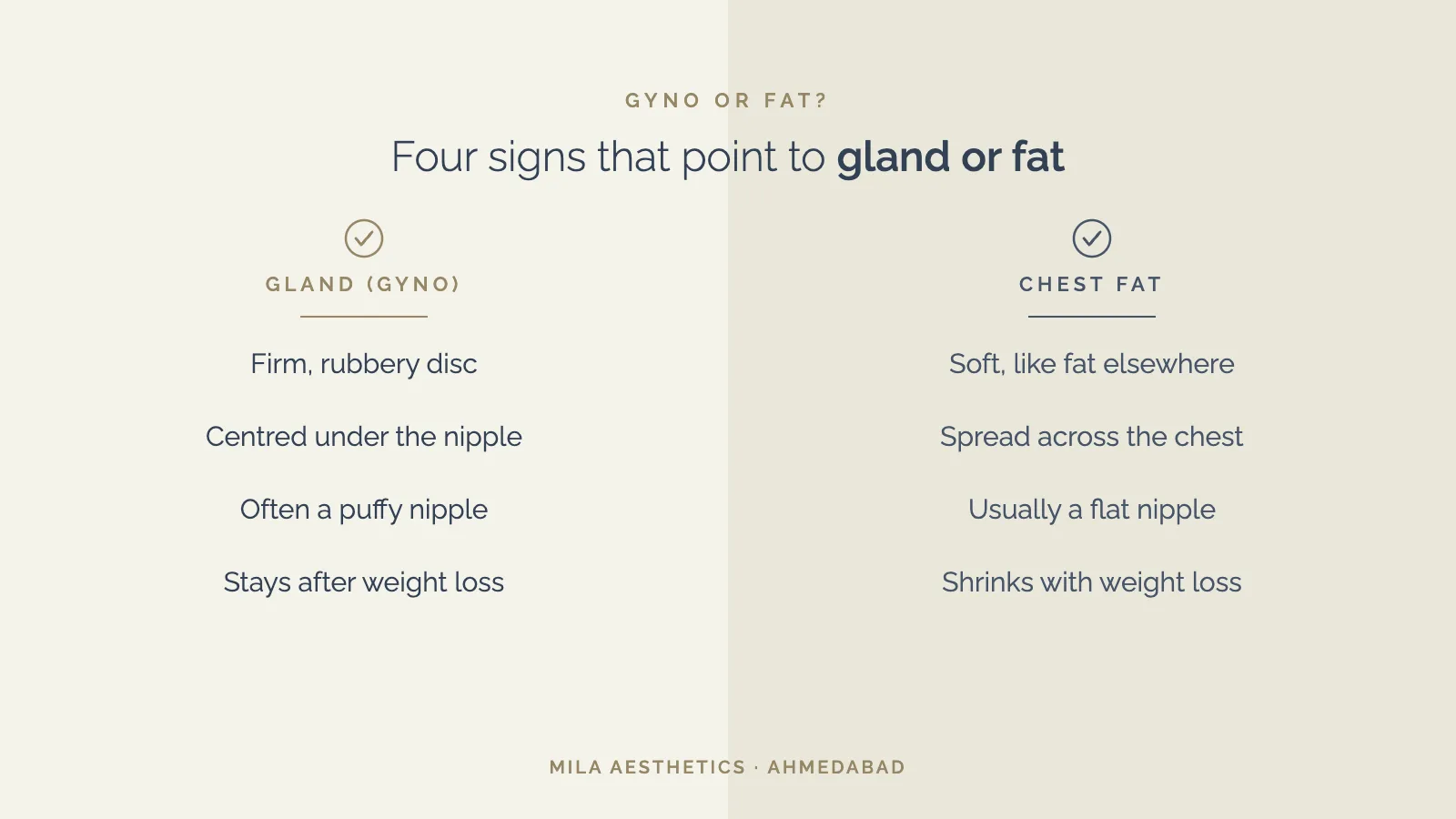
| Sign | Gynecomastia (gland) | Chest fat |
|---|---|---|
| How it feels | Firm or rubbery | Soft, like fat elsewhere on the body |
| Where it sits | A disc or mound centred under the nipple | Spread evenly across the chest, often towards the sides |
| Nipple shape | Often puffy or pushed outwards | Usually flat, sitting on a fuller chest |
| Tenderness | Can be sore, especially when it first develops | Usually not tender |
| Response to weight loss | Little or no change | Reduces as body fat falls |
5 ways to tell gyno or fat at home
These checks give you a clue, not a diagnosis. Use them to understand your chest, then see a doctor to confirm.
- The pinch test. Lying on your back, gently pinch the tissue directly under the nipple between thumb and finger. A firm, rubbery disc suggests gland; soft tissue that feels like fat elsewhere suggests fat.
- Look at the nipple. A puffy, cone-shaped nipple and areola point towards gyno. A flat nipple on a rounded chest points towards fat.
- Check the spread. Fullness centred only behind the nipple suggests gland; fullness across the whole chest and under the arms suggests fat.
- Notice tenderness. New soreness or sensitivity behind the nipple is more typical of gland tissue that is growing.
- Track weight loss. If you lose weight and the rest of your body slims but the area under the nipple does not, gland tissue is likely involved.
What causes gynecomastia
Gland tissue grows when the balance between oestrogen and testosterone tips, even slightly. Common reasons include:
- Puberty: very common in teenage boys and often settles on its own within a few months to two years.
- Weight gain: fat tissue can raise oestrogen levels, encouraging both fat and gland growth.
- Medicines and substances: including anabolic steroids, some prescription medicines, alcohol and certain recreational drugs.
- Ageing: testosterone naturally falls with age.
- Medical conditions: such as liver, kidney or thyroid problems, which a doctor may check for.
Never stop a prescribed medicine on your own because of chest changes; talk to the doctor who prescribed it.
Can exercise fix gyno or fat?
Exercise and a healthy diet reduce chest fat, and chest workouts build the muscle underneath, which can improve the shape of the chest.
Exercise cannot remove gland tissue, though. If gyno is present, losing weight often makes the gland more noticeable rather than less, because the fat around it shrinks. This is why many men who are fit and slim still have a puffy nipple area. Our guide to liposuction vs weight loss explains how fat reduction and contouring differ.
How a doctor confirms gyno or fat
A plastic surgeon can usually tell gyno or fat apart with a careful examination of the chest. Depending on your history, they may also suggest:
- An ultrasound to see how much of the fullness is gland and how much is fat.
- Blood tests to check hormone levels and organ function, especially if the change is new or one-sided.
- A review of medicines and supplements that might be contributing.
Treatment for gyno, fat or both
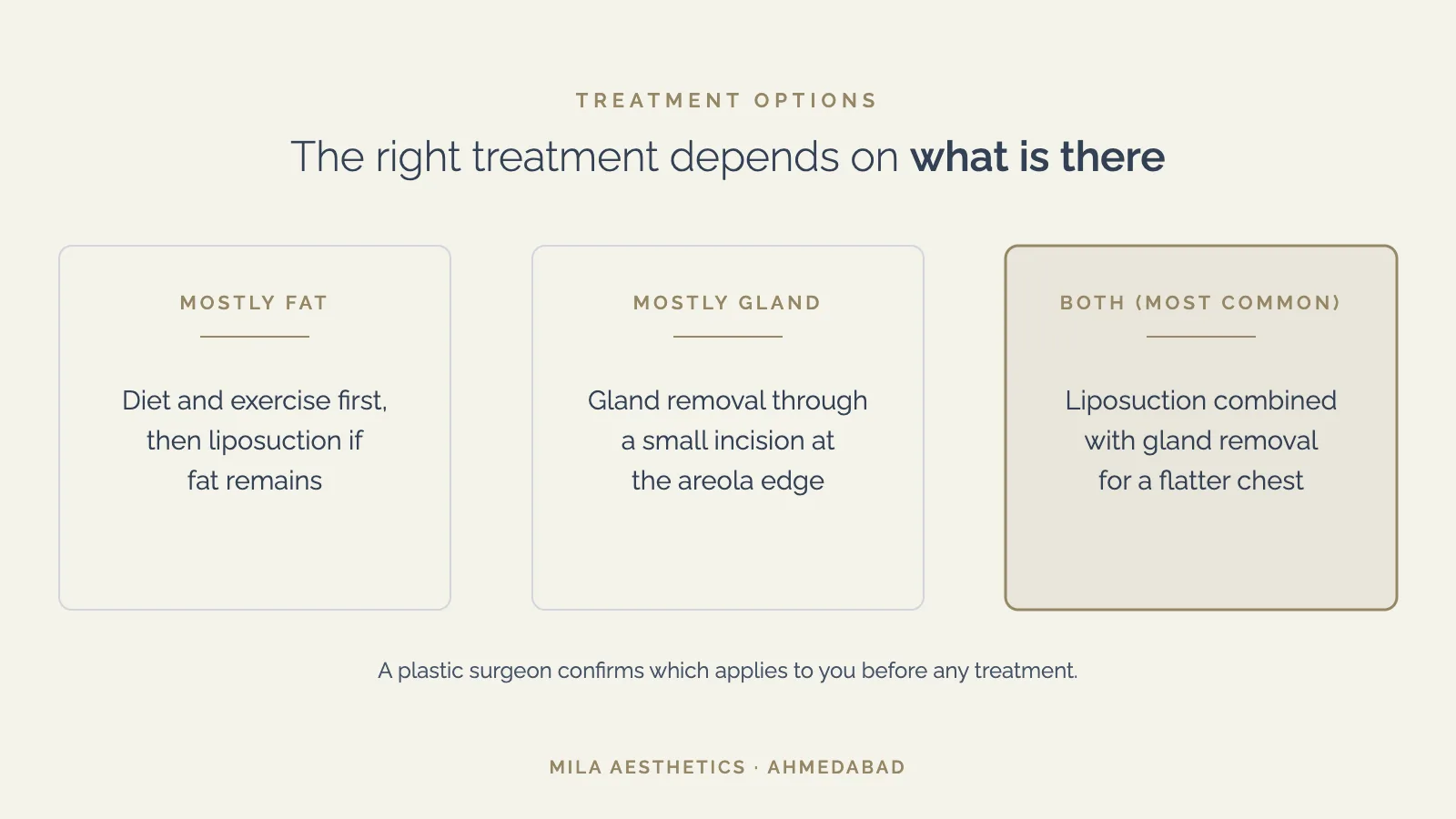
If it is mostly fat
Weight loss and strength training are the first step. If stubborn fat remains despite a healthy weight, liposuction can contour the chest.
If it is mostly gland
Gland tissue does not respond to diet, so gynecomastia surgery removes it through a small incision, usually at the edge of the areola. In some early or medicine-related cases, a doctor may first treat the underlying cause.
If it is both
This is the most common situation. Surgery usually combines liposuction for the fat with removal of the gland, to create a flatter, more even chest. Some men combine it with other procedures as part of a men’s makeover.
If you are weighing up surgery, our guide to gynecomastia surgery cost in Ahmedabad explains what affects the price.
Gyno or fat in teenagers
Chest swelling during puberty is very common and is often called pubertal gynecomastia. Hormone levels shift quickly at this age, and the gland tissue usually settles on its own as hormones balance out.
- Wait and watch: doctors often recommend reviewing it over time rather than treating it straight away.
- See a doctor sooner if the swelling is large, painful, one-sided or appears very early or very late in puberty.
- Surgery is usually only considered once growth has settled and the gland has persisted.
Teenagers often feel very self-conscious about this, so a calm, private conversation with a doctor can be reassuring in itself.
What recovery looks like after gynecomastia surgery
Recovery depends on how much gland and fat is removed, but most men follow a similar pattern:
- First week: swelling and bruising, a compression garment worn as advised, and light walking.
- Return to desk work: usually within about a week.
- Exercise: light activity first, with chest workouts and heavy lifting reintroduced over several weeks as your surgeon advises.
- Final shape: swelling settles gradually over a few months, revealing the flatter contour.
Signs to see a doctor promptly
Most chest fullness in men is harmless, but some changes should be checked without delay:
- A hard lump on one side only
- Discharge or bleeding from the nipple
- Skin dimpling, puckering or a nipple that turns inwards
- A lump in the armpit
- Rapid growth or pain that does not settle
The NHS has clear patient information on breast changes in men if you want to read more.
Gyno or fat? Get a clear answer at MILA Aesthetics
At MILA Aesthetics in Bodakdev, Ahmedabad, a plastic surgeon examines your chest privately, explains how much is gland and how much is fat, and recommends the simplest treatment that fits. Many men find that a single consultation ends months of guessing about gyno or fat.
Frequently asked questions
How do I know if it is gyno or fat?
Gyno usually feels like a firm, rubbery disc directly under the nipple, while fat feels soft and spreads across the chest. Fat shrinks with weight loss; gland tissue usually does not. A doctor’s examination confirms it.
Can gyno go away on its own?
Gynecomastia during puberty often settles within a few months to two years. Gyno that has lasted longer, or that started in adulthood, is less likely to disappear without treatment.
Can chest exercises remove gynecomastia?
No. Chest exercises build muscle and help reduce fat overall, but they cannot remove breast gland tissue.
Can you have both gyno and chest fat?
Yes. A mix of gland and fat is very common, which is why treatment often combines liposuction with removal of the gland.
Is gynecomastia dangerous?
Gynecomastia itself is usually harmless, but a hard one-sided lump, nipple discharge or skin changes should be checked by a doctor promptly.
Is gynecomastia surgery permanent?
Removed gland tissue does not usually grow back. Keeping a stable weight and avoiding substances such as anabolic steroids helps maintain the result.
Final thoughts
The answer to “gyno or fat?” decides the right treatment. Fat responds to diet, exercise and liposuction; gland tissue needs surgical removal; and most men have some of both. A short, private consultation gives you a clear answer and a plan.
Find out if it’s gyno, fat or both
Visit MILA Aesthetics, Sylph 203, Sindhu Bhavan Marg, Bodakdev, Ahmedabad.
WhatsApp us Call 83474 47477